
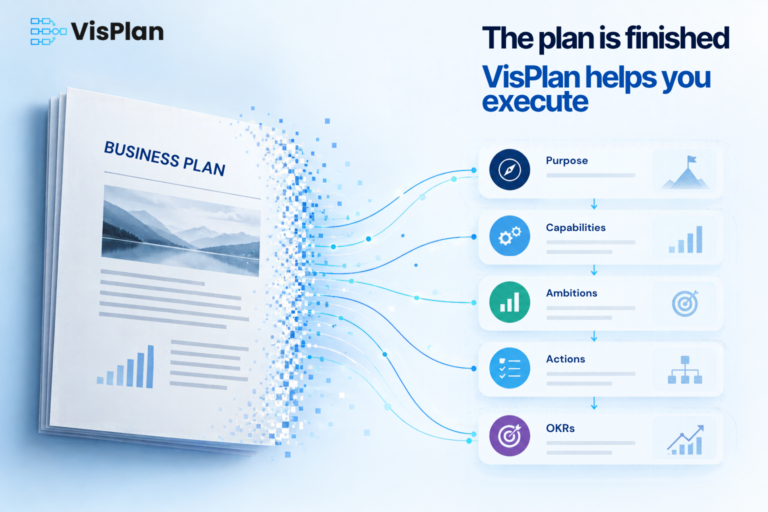
A business plan can define where an organization wants to go. The challenge is connecting that direction to what actually happens next.
This means creating a clear path from strategy to execution:
Purpose → Capabilities → Ambitions → Actions → OKRs
Together, these elements create a clear connection between strategic direction, what needs to happen, and the outcomes the organization wants to achieve.
Instead of strategy being something that is created and periodically revisited, it can become a living framework for guiding execution.
Strategy should evolve with the business
No plan remains unchanged.
New opportunities appear. Priorities shift. Capabilities develop. Some actions deliver the expected results, while others require a different approach.
An executable strategy makes it easier to see these changes and understand how they affect the bigger picture.
It also creates valuable context for AI. Rather than operating separately from the organization’s direction, AI agents can assist people with analysis, alternatives, actions, and progress while working within the strategic context already established by the organization.
The decisions, however, remain with people.
Technology can help make the connection between strategy and execution stronger, but leadership, judgement, and accountability remain human responsibilities.
The goal is not simply to create a better plan.
It is to create a strategy that can be understood, acted on, measured, and adapted.